Clover Health
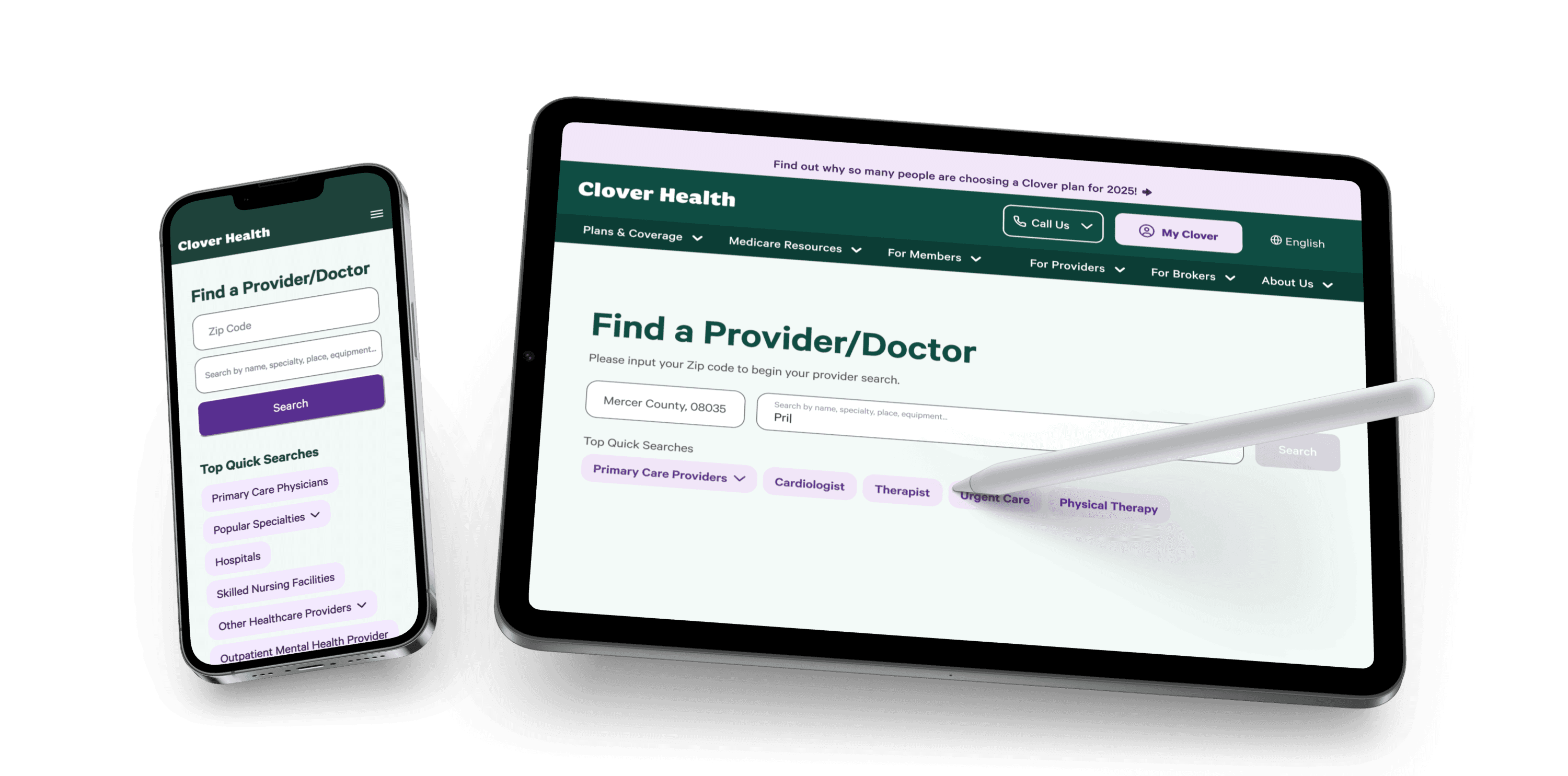
Led the redesign of the search experience leading to 84% increase in CSAT & 33% increase in conversions.
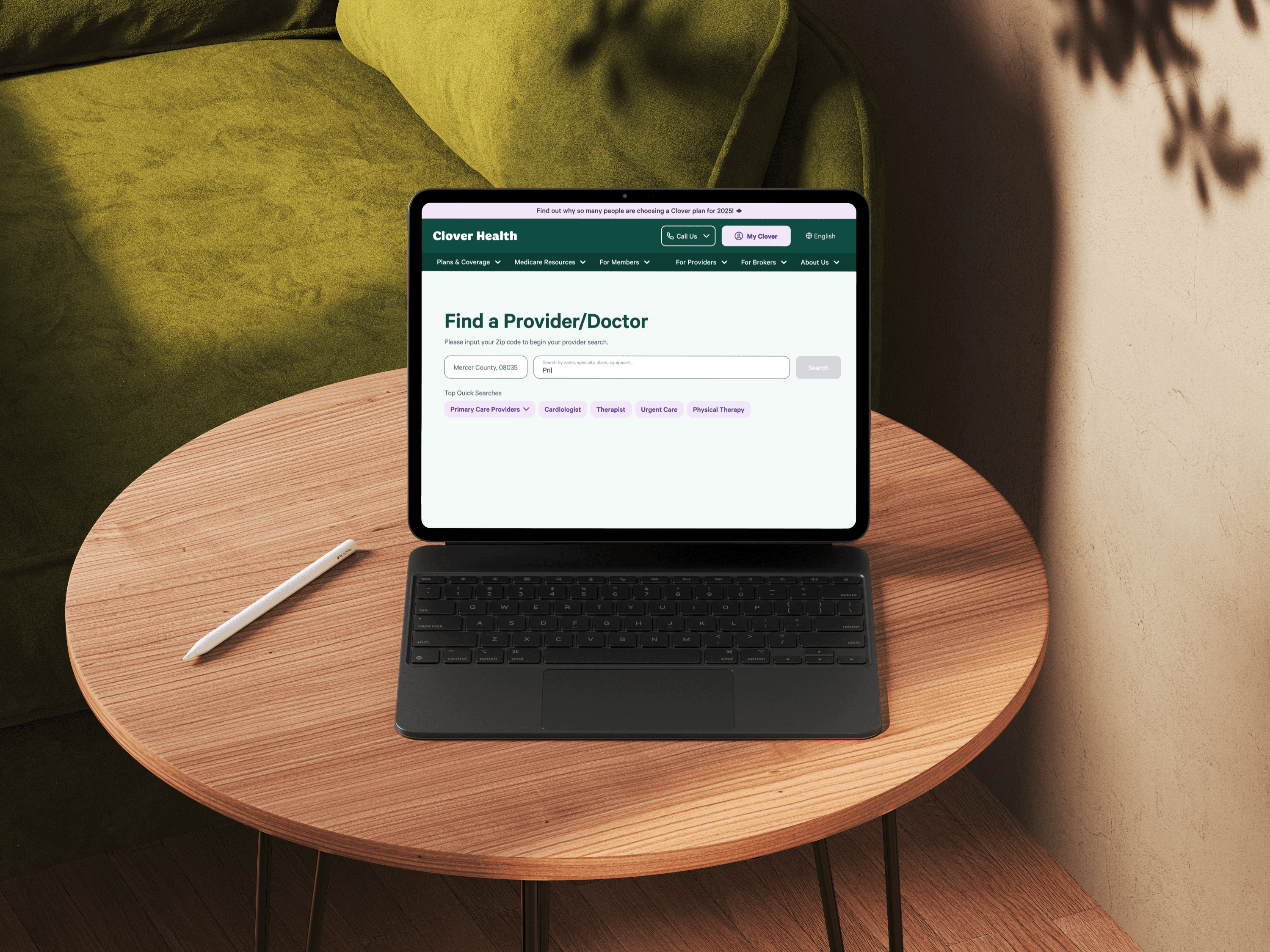
The Problem
The Clover team were moving out of there MVP design solutions and needed a design lead to not only redesign their search experience but review the major userflows and design guidelines. My approach started with the latter, as the implications persisted throughout all of the experiences.
User Need
Find a network provider.
Business Goal
Increase conversions and improve CSAT throughout the search experience.
The Approach
UX Audit & Research
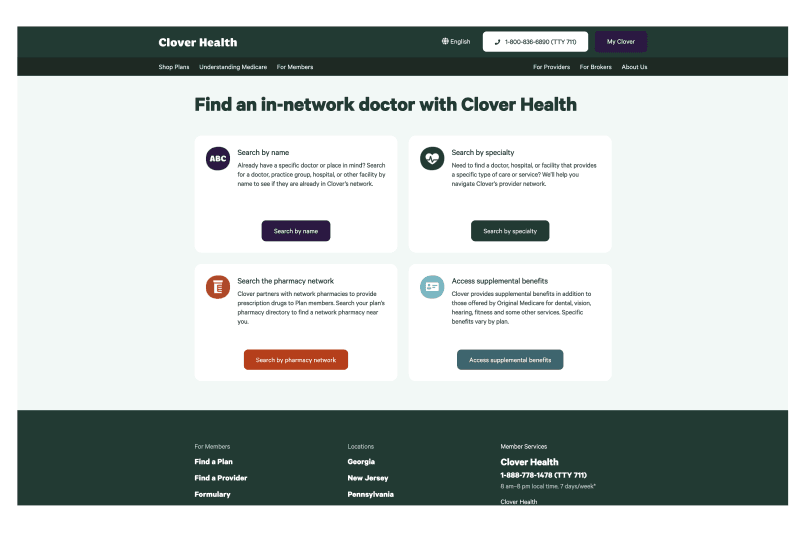
I began by running a full UX Audit on the search experience and thoroughly documented what worked and what didn't work on a Figjam canvas for a facilitation session for feedback. The key issues that stood out were:
Very high interaction cost
Unnecessary fragmentation between overlapping user experiences
Non-compliance with WCAG guidelines
After the audit, I ran competitive research to fully understand the landscape and complexities overlooked in our UX. This was pivotal in being able to establish benchmarks and opportunities for Clover to be clearly differentiated based on its competitors.
Exploration & Ideation
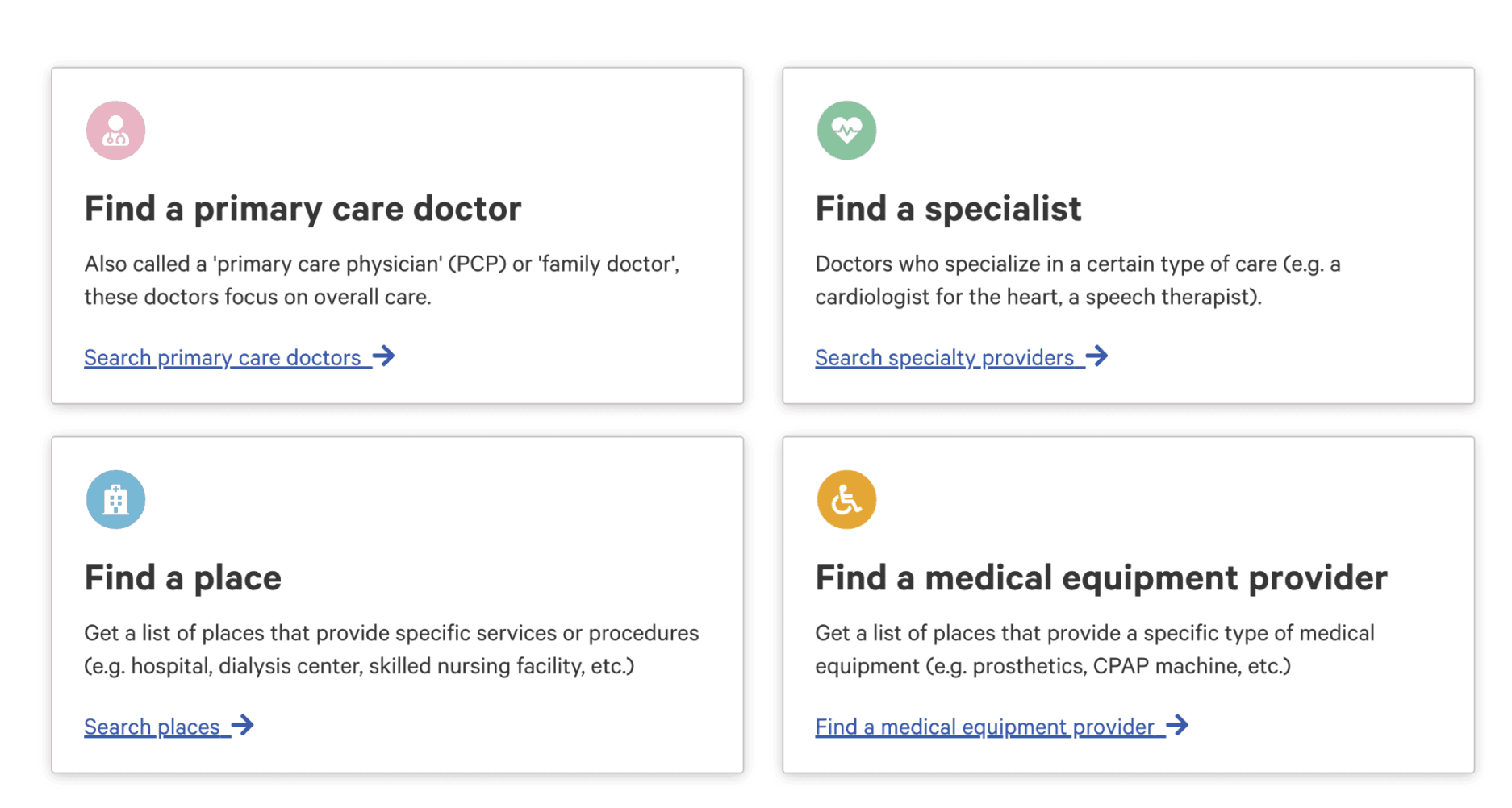
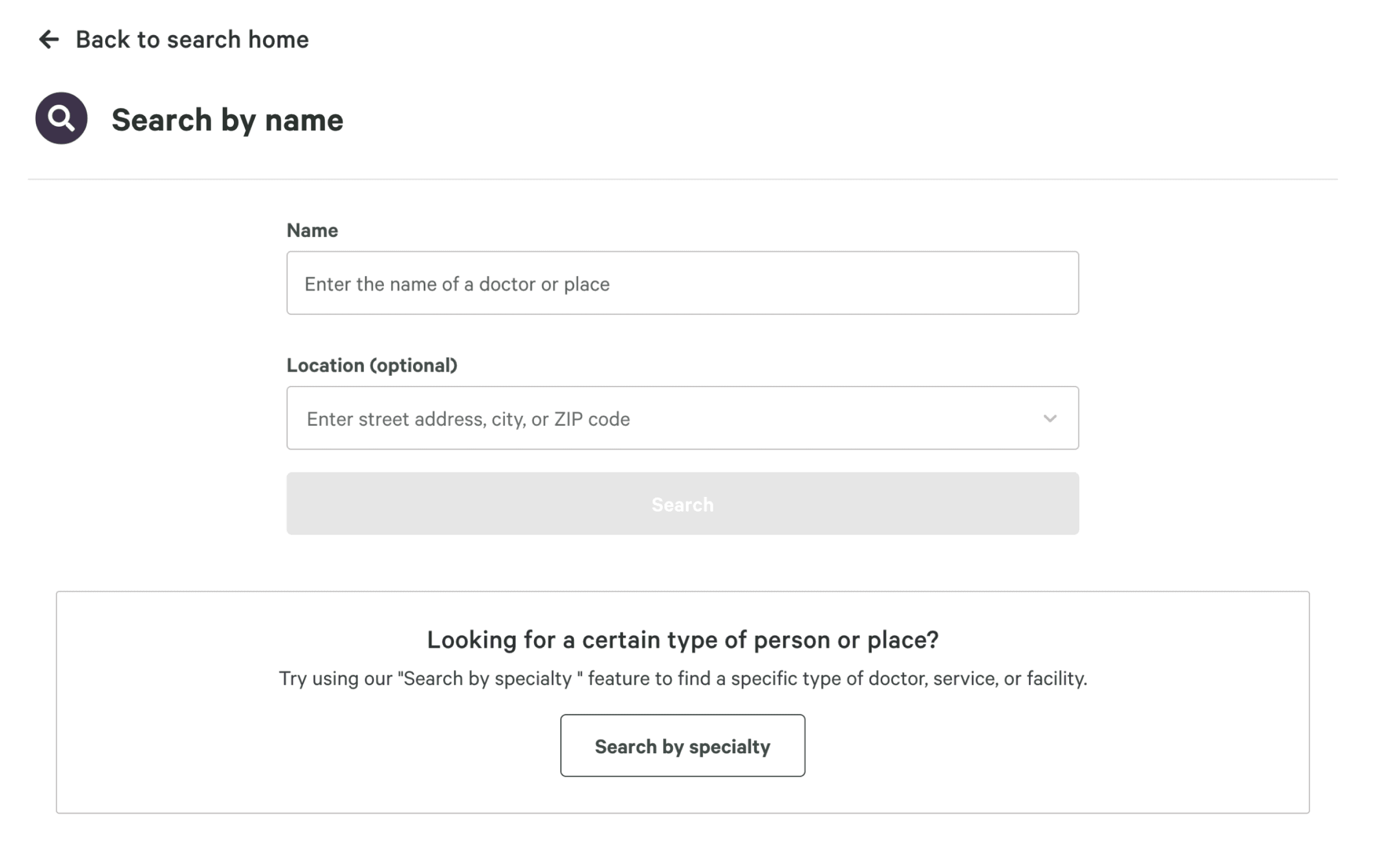
My exploration started with understanding the current dev constraints and ran a facilitation session to get alignment on new remapped userflows. This led to faster alignment with our major stakeholders on the potential design constraints based on the identified dev constraints and really allowed me to start iterating and landing on feasible solutions very quickly.
After prototyping my 2 main approaches and getting major buy in on one of them, we proceeded towards using Hubble for moderated and unmoderated testing. I still advocated for testing both approaches which turned out to be beneficial, in that, the secondary version had key components that performed much better than that that was chosen by our team.
Testing & Validation
I forgot to mention that I was the only designer on this project, so I led the research initiative with Hubble as it provided a budget-friendly quick option to get the validation we needed to finalize our approach.
Key Design Decisions
1. Mobile first responsive design
The team lacked analytic support which led to a misinterpretation of the user data. This was pivotal because they thought their mobile usage was insignificant, but it turned out that mobile usage was growing significantly every month so a mobile-first approach is what I advocated for as the data showed that, given the current trajectory, in another quarter mobile usage could exceed desktop usage.
2. AA Compliance is the minimum requirement
This was another major oversight as the website not fully compliant and was causing significant drop-offs due to a lack of accessibility at 2 major points of the user journey. I was able to use Stark and collaborate with devs to ensure AA as a minimum requirement and aim for AAA where feasible.
3. Ongoing Tracking
Lastly, tracking was only done from a very high level, so I pushed to partner to get greater support from CrazyEgg to track the user journeys more thoroughly to fully understand how and where the experience could be improved, even beyond my involvement.
Results, Learnings & Impact
I was able to successfully lead the team to meeting both business goals and user needs for not only the search experience but for the broader UX of the website.
We increase conversions through the search experience by a whopping 84% and in the first month, increase CSAT of the search experience by 33%. I was also able to lead the team to AA Compliance and recently got updated the conversions through the landing page have increased by 91%.